
 Log in


Elephants Shape African Forests By Eating – and Excreting – Seeded Fruits

It’s no surprise that elephants rely on their ecosystems to thrive. But a new study finds that the relationship is reciprocal.
The study—Context-dependent forest elephant seed dispersal: implications for pathways of elephant-driven patterns of biodiversity and carbon storage—reveals how Africa’s giants both reflect and contribute to the health of tropical ecosystems they inhabit. Published in Oikos, the research shows that by feasting on their favorite fruits and then walking through the forest, elephants spread seeds across long distances through their abundant dung. In doing so, they play an unintentional but essential role as “megagardeners”—helping to determine which plant species thrive, influencing the structure of forests, and even affecting how much carbon those forests can store.
The researchers conducted a year-long field study across the three forested sites in Gabon—Ivindo, Loango and Wonga Wongué—combining data on fruit availability, elephant diet, and seedling germination. They found that seeds are present in most elephant dung, confirming elephants’ vital role as “planting” their preferred fruits across long distances. Analyses also revealed that fruit patterning varied, which challenged assumptions that elephants play a uniform ecological role in their ecosystems.
“When elephants thrive, so do the forests they shape,” said Megan Sullivan, a postdoctoral researcher at Princeton’s High Meadows Environmental Institute and lead author of the study. “But our findings show that their impacts differ across the landscape. Conservation strategies must reflect that variability to truly benefit both wildlife conservation and nature-positive solutions.”
The species that elephants dispersed—and their carbon storage potential—differed across sites. In some forests, elephants primarily spread seeds of tree species that sequester high levels of carbon—like ozuga (Saccoglottis gabonensis) and African bush mango (Irvingia gabonensis). In other places, they dispersed herbs and lianas, broadening their ecological influence. Seedling germination and survival varied across locations, reflecting how local conditions such as forest structure and microclimate shape dispersal success.
The team also observed lower dung-pile seed content compared to previous studies of elephant seed dispersal in the region, which the authors suspect is a result of declines in fruit production in these forests, due to climate change.
Standard models in the field assume that elephants universally enhance carbon storage by favoring large-seeded, fleshy-fruited tree species, but Sullivan’s team shows that elephant impacts are shaped by local differences in resource availability, elephant diet preferences, and climate change impacts.
“Elephants’ capacity to influence ecosystems could be constrained by context-dependency,” explained Sullivan. “To fully integrate wildlife into climate and biodiversity frameworks, it is important to account for that context-dependency and for variability in how we model and assess the contribution of wildlife to their ecosystems. In future studies, incorporating information about fruit availability across the landscape will help align nature-based solutions with megafauna conservation efforts.”
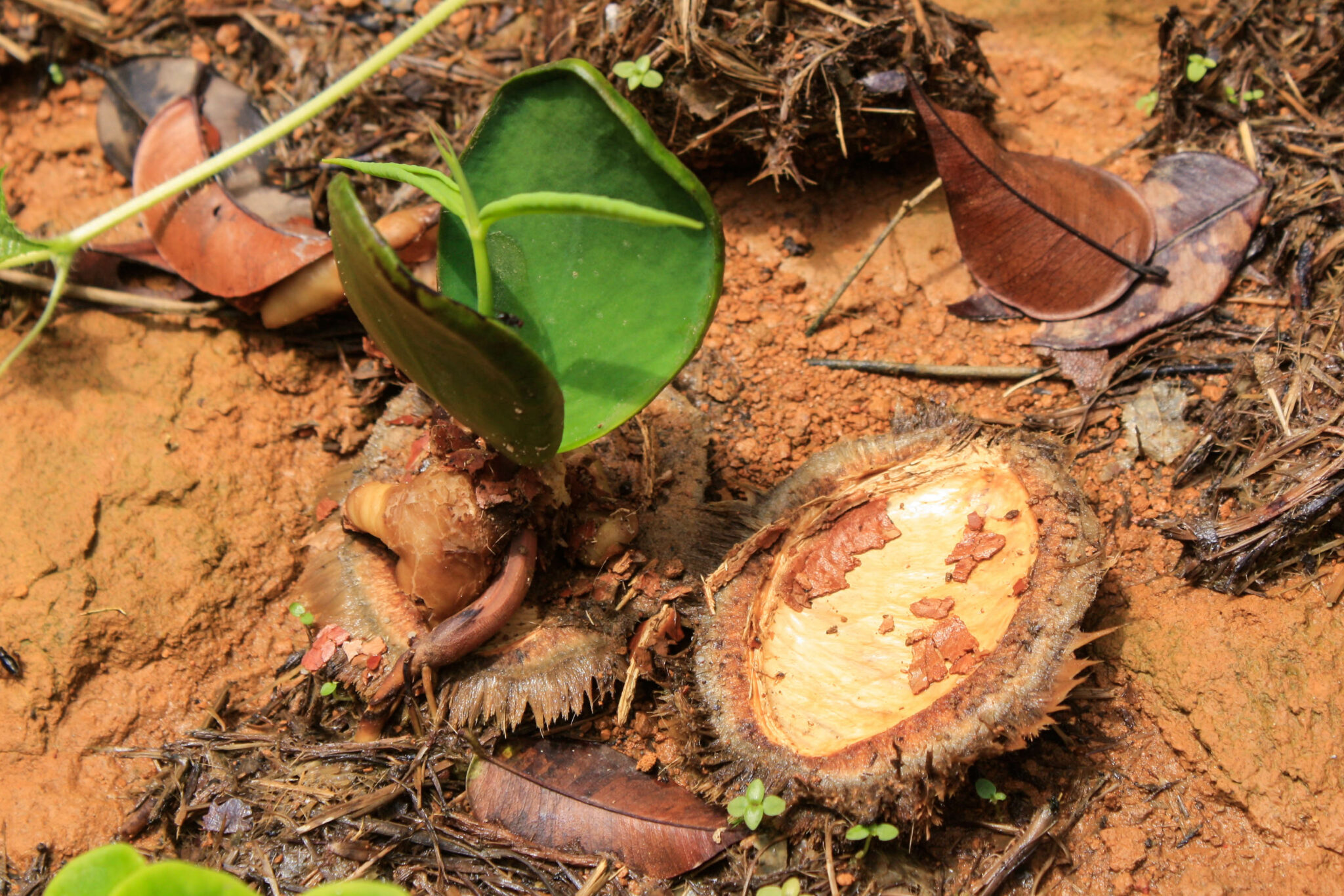 Photo credit: Liam Jasperse-Sjolander
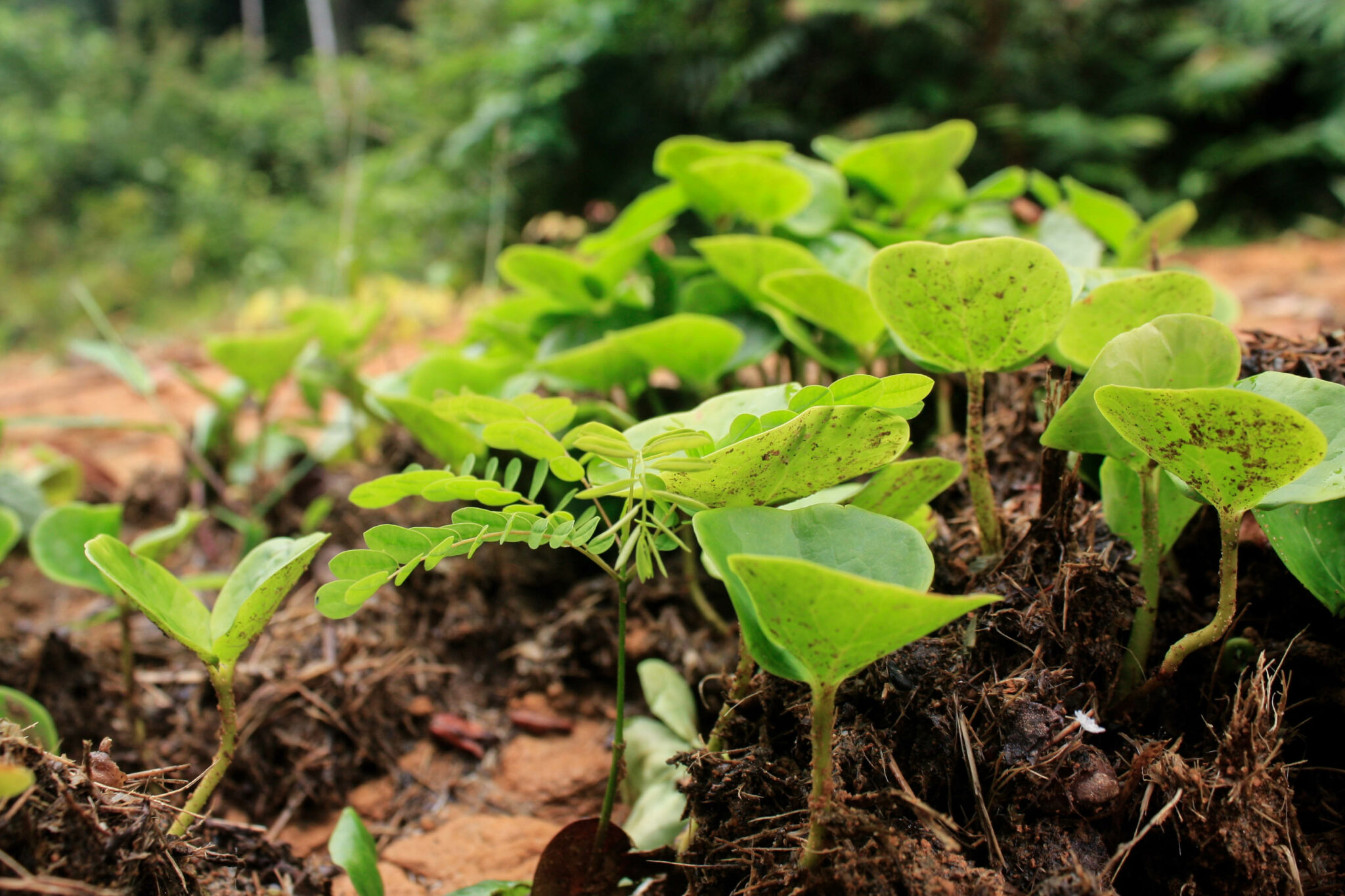 Photo credit: Liam Jasperse-Sjolander